HVAC systems account for roughly 40% of commercial building energy use. Now imagine those systems fine-tuning themselves, predicting breakdowns before they happen, and cutting energy costs by double digits. That is what artificial intelligence HVAC delivers for contractors and building owners alike. By combining sensors, data analytics, and machine learning algorithms, modern climate control moves beyond simple thermostats into a fully integrated, self‑optimizing system. For skilled trades companies, this shift means fewer emergency calls, longer equipment life, and a stronger value proposition for clients.
What Is Artificial Intelligence HVAC?
Artificial intelligence HVAC refers to climate control systems that use machine learning and data analysis to adjust heating, cooling, and ventilation automatically. Instead of following a fixed schedule or reacting to a manual temperature change, an AI‑powered system learns from historical data, weather forecasts, occupancy patterns, and equipment performance. The result is a system that anticipates needs rather than just responding to them.
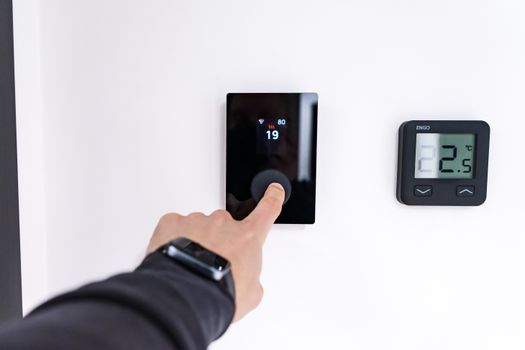
Central to this technology is the ai thermostat, a device that goes far beyond programmable setpoints. Modern AI thermostats communicate with sensors throughout a building, analyze usage trends, and make real‑time adjustments. They also feed data into a broader building management system that oversees multiple zones, chillers, boilers, and air handlers. Contractors who understand these components can offer clients a much higher level of service than standard maintenance or replacement.
Key Technologies Driving AI in HVAC
Several interlocking technologies make artificial intelligence HVAC practical and affordable for most commercial buildings today.
Machine Learning and HVAC Analytics
Machine learning algorithms detect patterns that human technicians might miss. For example, a gradual rise in motor temperature or an unusual vibration pattern can signal an impending failure. HVAC analytics platforms compile sensor data and flag anomalies using machine learning hvac models trained on thousands of similar units. This predictive capability is the foundation of predictive maintenance hvac, covered in the next section.
Internet of Things and Smart Sensors
The rise of iot hvac, Internet of Things enabled devices, means every component can now report its status. Wireless temperature sensors, pressure transducers, and flow meters create a dense network of real‑time data. This enables smart hvac systems to react instantly to changes in occupancy or outdoor conditions without waiting for a central controller to poll each device.
Intelligent Climate Control Algorithms
Advanced controllers use intelligent climate control algorithms that balance comfort, air quality, and energy use simultaneously. During peak demand periods, the system might pre‑cool a building before electricity rates spike, then allow a slight temperature drift. This strategy, known as demand response, is a form of energy optimization hvac that lowers utility costs without sacrificing occupant comfort.
Predictive Maintenance HVAC: Catching Problems Before They Cost You
Unexpected equipment failures are the bane of every HVAC contractor. Night‑time breakdowns, holiday emergencies, and compressor replacements during a heat wave eat into margins and frustrate customers. Predictive maintenance hvac changes that equation.
By continuously monitoring equipment parameters, current draw, vibration, refrigerant pressure, superheat, subcooling, AI models identify behaviour that precedes a failure. A typical system can alert the service provider weeks in advance that a capacitor is weakening or that a fan belt needs adjustment. Instead of reacting to a no‑cooling call, the contractor schedules a low‑cost visit during regular hours.
For the building owner, this translates directly into reduced downtime and lower repair costs. Studies from the U.S. Department of Energy show that predictive maintenance can cut HVAC repair expenses by 25% to 30% annually. For example, a Toronto-based property management firm with 12 rooftop units saw a 28% reduction in repair costs after implementing AI monitoring. For the contractor, it means predictable service routes, fewer after‑hours calls, and stronger long‑term contracts.
Energy Optimization HVAC: Saving Money and the Planet
Energy costs are often the second largest expense for commercial buildings after payroll. Energy optimization hvac tackles that line item head‑on by using AI to match supply precisely to demand.
A traditional system might run a chiller at fixed capacity from 8 a.m. to 6 p.m. regardless of how many people are actually in the space. An AI system, by contrast, analyses occupancy from motion sensors, badge swipes, or even Wi‑Fi device counts. It zones the building dynamically, cooling only occupied areas and letting unoccupied spaces drift toward more efficient setpoints. In a mixed-use building with retail, office, and residential zones, this approach has cut annual cooling costs by 18% while maintaining comfort across all areas.
The table below compares traditional HVAC operation with an AI‑optimized approach across key performance metrics.
Metric
Traditional HVAC
Artificial Intelligence HVAC
Energy consumption (annual)
Baseline
15% – 25% lower
Maintenance cost per unit
$1,200 – $1,800
$800 – $1,200
Mean time between failures
4 – 6 years
7 – 10 years
Occupant comfort complaints
12 – 15 per year
3 – 5 per year
Data required for decisions
Minimal (thermostat only)
Extensive (sensor network)
These numbers vary by climate and building type, but the trend is clear. Hvac automation driven by AI delivers measurable returns within the first year of implementation.
How HVAC Contractors Can Adopt AI Without Replacing Their Workforce
Some tradespeople worry that artificial intelligence will make their skills obsolete. In practice, the opposite is true. AI handles the data processing and pattern detection, while experienced technicians provide the hands‑on diagnostics, repair, and customer relationship that machines cannot replace.
The first step for any contractor is to understand the technology well enough to answer client questions. Start by reading product documentation from major manufacturers and attending training sessions. Next, consider partnering with a supplier that offers AI‑enabled controllers or retrofitting kits. Many modern units are plug‑and‑play with existing ductwork and wiring.
Contractors looking for a broader view can explore [link: AI tools for HVAC contractors] that cover everything from load calculations to inventory management. Pairing an AI thermostat with a [link: job management software for trades] streamlines scheduling, billing, and customer communication for a complete operational upgrade. Finally, staying informed about [link: construction AI software] helps tradespeople see where the industry is heading and positions them as trusted advisors rather than commodity service providers.
Frequently Asked Questions
How much does an artificial intelligence HVAC system cost?
A full AI retrofit for a small commercial system typically runs from $3,000 to $8,000 including sensors, controllers, and installation. Larger buildings may see costs of $15,000 or more, but the investment often pays back in energy savings within two years.
Can artificial intelligence HVAC work with existing equipment?
Yes. Most AI solutions are designed as add‑on controllers or cloud‑based platforms that communicate with existing chillers, boilers, and air handlers. Legacy equipment can participate if it has compatible control interfaces or can be fitted with aftermarket sensors.
Do I need a special licence to install AI HVAC systems?
No separate licence is required beyond the standard HVAC contractor licence in your province. However, you must understand electrical and low‑voltage wiring rules and follow manufacturer specifications. Some jurisdictions may require an electrician for certain sensor installations.
Will AI HVAC make traditional service contracts obsolete?
Not at all. Service contracts become more valuable because the AI provides early warnings that require a technician to act. Contractors can offer tiered plans, basic monitoring only, or full monitoring plus priority response, and charge a premium for the data‑driven insight.
How does AI HVAC handle data privacy?
Sensors collect temperature and occupancy patterns, not personal information. Reputable manufacturers encrypt data in transit and at rest, and many store it on local servers instead of the cloud. Contractors should review privacy policies and offer clients the option to keep data on‑premise.
How long does a typical AI HVAC installation take?
For a mid-sized commercial building (10–20 zones), a full retrofit with sensors and cloud integration usually takes four to six days. Smaller single-zone systems can be installed in one day. The contractor should factor in time for commissioning and staff training.
Photo by AlphaTradeZone on PexelsPhoto by Rinat Askarov on PexelsPhoto by HUUM │sauna heaters on Pexels





Leave a Reply